1.53 Million Barrels Per Day Is Not a Victory ; Nigeria Must Stop Celebrating Stagnation - Engr. Jude Gbaboyor
- by Kalaboy, HSN, River State
- about 3 months ago
- 605 views
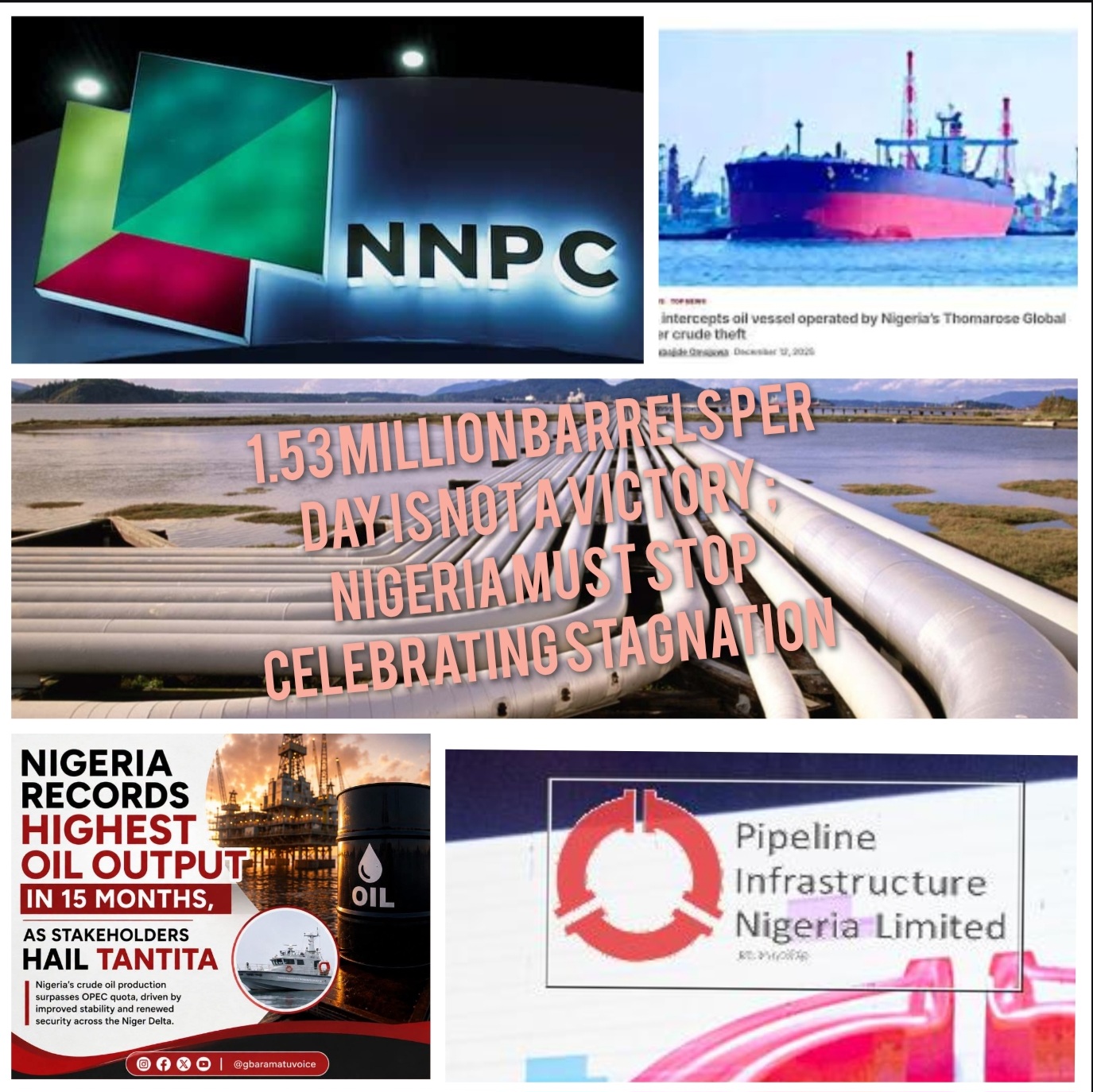
.....As Pipeline Surveillance Decentralization Is The Key to 2mbpd+ Oil Production
As I watch developments in the global oil and gas industry, one question continues to trouble me: why is Nigeria celebrating 1.53 million barrels of crude oil production per day when we should be producing far more?
Across the world, oil-producing nations are increasing their output and expanding their production capacity. Countries are investing heavily in upstream operations, improving field development, securing critical infrastructure, and positioning themselves to maximize revenue from crude oil exports.
The United Arab Emirates, for example, has openly expressed concerns about production restrictions under OPEC because it believes its installed capacity allows it to produce much more crude oil than current quotas permit. That is a country fighting to increase production.
Nigeria's situation is completely different.
Around 2004 to 2013, Nigeria was producing about 2.2 to 2.4 million barrels of crude oil per day. Today, after more than a decade of challenges, our production fluctuates between 1 million and 1.5 million barrels per day. For over ten years, the country has remained trapped far below its true production capacity despite possessing some of the largest oil reserves in Africa.
That is why I find it difficult to understand the celebration surrounding the recent increase to 1.53 million barrels per day by NNPCL, Tantita Security Services and PINL
What exactly are we celebrating?
Are we celebrating a production level that is still significantly below what Nigeria is capable of producing?
Are we celebrating a system that allowed production to collapse in the first place?
Or are we celebrating the fact that production was allowed to crawl after being crippled for years?
To me, this is not a victory. It is a reminder of how much the country has lost.
I strongly believe that Nigeria's crude oil production stagnation is not a natural occurrence. It is a man-made problem driven by organized crude oil theft, weak accountability, and a surveillance structure that has failed to deliver the results Nigerians deserve.
One question that has continued to bother me is why production remains stagnant even after surveillance contracts were awarded in 2022 up till now, even when illegal creek oil bunkering has reportedly stopped by 99.9999 percent?
If the contractors currently being praised had the capacity to secure pipelines and reduce losses, why did Nigeria spend years suffering massive production declines?
Why did the country lose billions of dollars in revenue and we are celebrating as if there is an improvement ?
These are questions that deserve honest answers.
For years, I have spoken publicly and consistently about the need to decentralize pipeline surveillance contract the Niger Delta States. I have maintained that concentrating surveillance responsibilities in the hands of a few interests creates opportunities for abuse, weakens accountability, and limits transparency.
The truth is simple.
Nigeria has the capacity to produce between 2.5 million and 3 million barrels of crude oil per day if oil theft is seriously addressed and if critical infrastructure is properly secured.
The current production level of 1.53 million barrels per day should not be presented as an achievement because it remains far below our potential.
The reality is that crude oil theft remains a major problem.
Even today, reports and allegations of illegal crude loading operations continue to raise concerns.
I continue to ask important questions.
Who are the individuals behind Nigeria Skipper Thomarose stolen crude oil vessel intersected by the US Navy in Venezuela waters?
Who loads vessels carrying stolen crude?
Who authorizes these operations?
Who protects those involved?
Who benefits from the proceeds?
These questions have remained unanswered for years.
There have been reports involving vessels linked to suspicious crude oil activities, including incidents that attracted international attention. Yet many Nigerians still believe that investigations have not gone far enough to identify and prosecute those truly responsible.
When major criminal activities continue without consequences, people naturally begin to question whether powerful interests are being protected.
That is why I believe crude oil theft in Nigeria is not the work of ordinary criminals alone. It is an organized network involving influential actors who have mastered the art of operating within the system while avoiding accountability.
What worries me even more is the attempt by these same monopolise surveillance contractors interests to expand their control into offshore security operations.
In my view, giving additional responsibilities to organizations that already dominate pipeline surveillance without broader accountability could create even greater concerns and make their criminality perfect.
The Nigerian Navy and other security agencies have repeatedly demonstrated their importance in protecting the nation's maritime assets. Any effort to centralize too much authority in one structure should be carefully examined in the interest of national security.
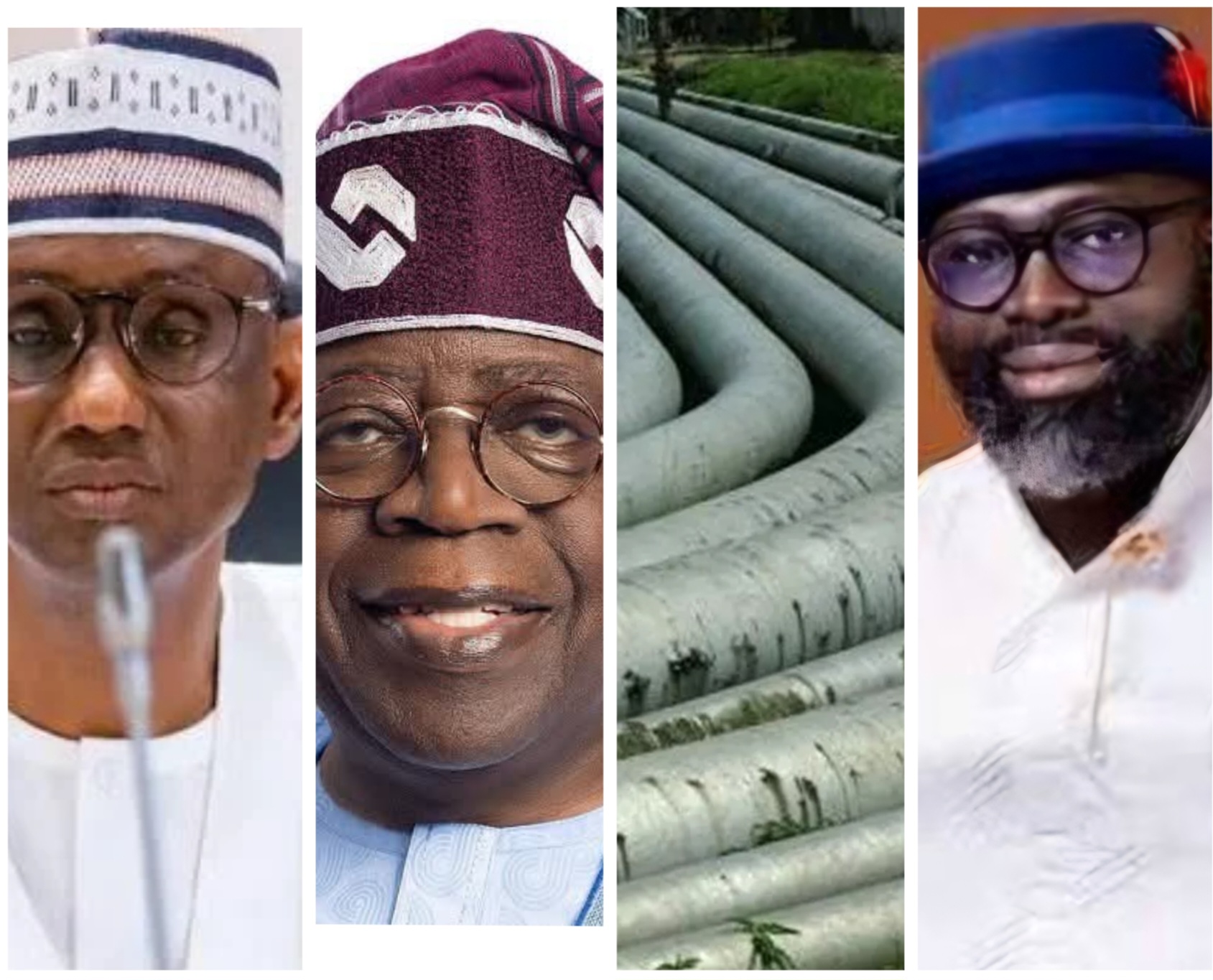
President Bola Tinubu is not unaware of these challenges ? He is already !
Many senior government officials who are not involved in these activities understand what is happening within the sector. They understand the scale of crude oil theft and the damage it has done to the country's economy.
The people benefiting from these activities also understand that increased scrutiny threatens their interests. That is why there is often resistance whenever genuine reforms are proposed.
One of my strongest concerns today involves the role of institutions and the National Assembly that should be providing oversight and accountability.
Whenever questions arise regarding public funds, contracts, or allegations of wrongdoing, investigations should be thorough, transparent, and independent.
That is why I found it troubling when calls for investigations appeared to be followed by vote of confidence rather than rigorous scrutiny by the National Assembly.
"When those charged with investigating alleged criminality instead offer a vote of confidence, they blur the line between accountability and endorsement, leaving justice in question." also "An investigation loses its meaning the moment the investigator becomes the defender."
The responsibility of oversight institutions is not to protect anyone from scrutiny but to ensure that public resources are managed responsibly and that every allegation is properly investigated.
The President should consider comprehensive reforms across key institutions connected to the petroleum sector. There should be a renewed focus on transparency, accountability, and measurable performance.
Most importantly, I believe pipeline surveillance contracts should be decentralized across the Niger Delta. State stakeholders and his host communities, should have meaningful participation in securing critical oil infrastructure.
Such a system would promote fairness, improve intelligence gathering, strengthen accountability, and reduce the concentration of power in a few hands like Tantita Security Services, which exploited the system by destroying pipelines, stealing tje crude and then presenting itself as the solution, along with other abuses in the oil and gas sector.
Decentralization would also create a stronger sense of ownership among communities while helping to protect pipelines, flow stations, export terminals, and other critical assets.
Nigeria's crude oil industry remains the backbone of government revenue and foreign exchange earnings.
The nation cannot afford to continue operating below capacity while billions of dollars are lost through theft, inefficiency, and weak oversight.
The goal should not be to celebrate 1.53 million barrels per day.
The goal should be to eliminate crude oil theft, reform the surveillance system, strengthen institutions, restore accountability, and unlock Nigeria's true production potential.
Only then can the country realistically move beyond 2 million barrels per day and reclaim its position as one of the world's leading oil-producing nations.
Until that happens, celebrating 1.53 million barrels per day is not a sign of success. It is a reminder of how much more Nigeria can achieve if the right decisions are made.





0 Comment(s)